Explore topics
Explore five topic areas that provide context on the history, law, diplomacy, culture, security, economics, and human impact connected to Israel and the Middle East. Learn what each topic covers, then visit the Resource Library to access related copy, imagery, social content, videos, and other shareable materials.
Evidence, history, media, and regional developments
Facts & Context
Facts & Context covers the events, organizations, terminology, and historical developments that shape public understanding of Israel and the broader Middle East.
This includes the histories of Israeli and Palestinian national movements,
regional borders, major conflicts and agreements, and the roles of governments, political movements, and armed organizations. It may also examine groups such as Hamas and Hezbollah, the regional role of Iran, and the timelines behind significant events.
The topic also considers how information is documented, reported, and
interpreted. This can include the use of public records, official designations, investigative reporting, historical sources, and other forms of evidence, as well as the influence of propaganda, disinformation, news coverage, and social media on public understanding.
Resources within this area of the toolkit may include historical background, timelines, definitions, claim verification, media analysis, and information about regional organizations and events.

Law, evidence, and institutional responsibility
Justice & Accountability
Justice & Accountability covers the legal principles, evidentiary standards, and accountability processes associated with armed conflict, terrorism, national security, human rights, and civilian protection.
This includes international humanitarian law, self-defense, proportionality, the distinction between civilians and combatants, hostage-taking, alleged war crimes, and the responsibilities of governments, militaries, and armed groups.
The topic also considers how conduct is documented and evaluated through courts, investigative bodies, legal precedents, United Nations resolutions, government processes, and international institutions.
Because legal questions may involve competing interpretations, this category may examine both the applicable standards and the evidence used to support particular claims. Resources within this area of the toolkit may address legal definitions, case studies, evidence, institutional processes, and differing interpretations of international and domestic law.

International relationships, policy, and regional cooperation
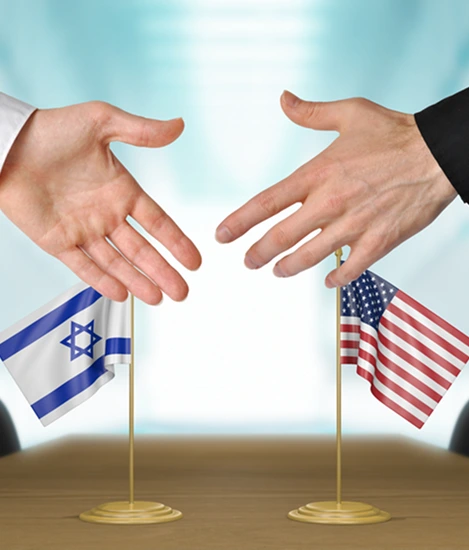
Alliance & Diplomacy
Alliance & Diplomacy covers the relationship between the United States and Israel, along with Israel’s relationships with neighboring countries, regional partners, and international institutions.
This includes foreign policy, defense and intelligence cooperation, trade,
technology partnerships, cultural exchange, diplomatic recognition, peace negotiations, ceasefires, mediation, and normalization agreements. It may also examine how security concerns, political interests, economic relationships, and regional conflicts affect diplomatic decisions.
The topic includes the history and structure of the U.S.-Israel relationship, as well as peace and normalization efforts such as the Camp David Accords, the Israel-Jordan peace treaty, the Oslo process, and the Abraham Accords. It may also consider the roles of the United States, Arab states, the United Nations, international mediators, and community-based coexistence initiatives.
Resources within this area of the toolkit may provide context on alliances, bilateral cooperation, peace agreements, diplomatic initiatives, international mediation, and regional policy.
People, communities, culture, and humanitarian conditions
Human Impact & Society
Human Impact & Society covers the personal, social, cultural, and humanitarian dimensions of life in Israel and the broader region.
This includes the experiences of civilians, hostages and their families, survivors of violence, displaced communities, first responders, minority populations, and people affected by conflict or political instability. It may also examine humanitarian assistance, medical response, recovery efforts, community support, and the effects of prolonged insecurity on families and daily life.
The topic extends beyond conflict to include religion, heritage, education, the arts, tourism, philanthropy, cultural exchange, and relationships between communities in Israel and the United States.
Resources within this area of the toolkit may include personal accounts, cultural background, humanitarian information, community stories, and material addressing the social effects of regional events.

Trade, research, technology, and economic activity
Economics & Innovation
Economics & Innovation covers economic relationships, industries, scientific research, entrepreneurship, and technological development associated with Israel, the United States, and the wider global economy.
This includes bilateral trade and investment, employment, business partnerships, startups, infrastructure, energy, supply chains, and cooperation among governments, universities, research institutions, and private companies.
The topic may also address developments in artificial intelligence, cybersecurity, medicine, biotechnology, agriculture, water management, communications, energy, and defense technology.
This category can additionally include behavioral and social research related to cognitive bias, propaganda, radicalization, identity, social influence, and information systems, particularly where those subjects intersect with technology, institutions, public behavior, or economic conditions.
Resources within this area of the toolkit may address trade, investment, scientific research, entrepreneurship, emerging technology, behavioral research, and the economic effects of international or regional developments.

Explore the Toolkit
Find resource by topic
The Resource Library is organized around the five topic areas outlined on this page. Each resource is categorized according to the subject it addresses, and some materials may appear under more than one topic when the content overlaps.
The toolkit may include background information, articles, timelines, graphics, videos, conversation guides, and other materials intended to provide additional context on specific issues.
Visitors may browse the complete library or begin with a topic that relates to their interests.

Post Copy
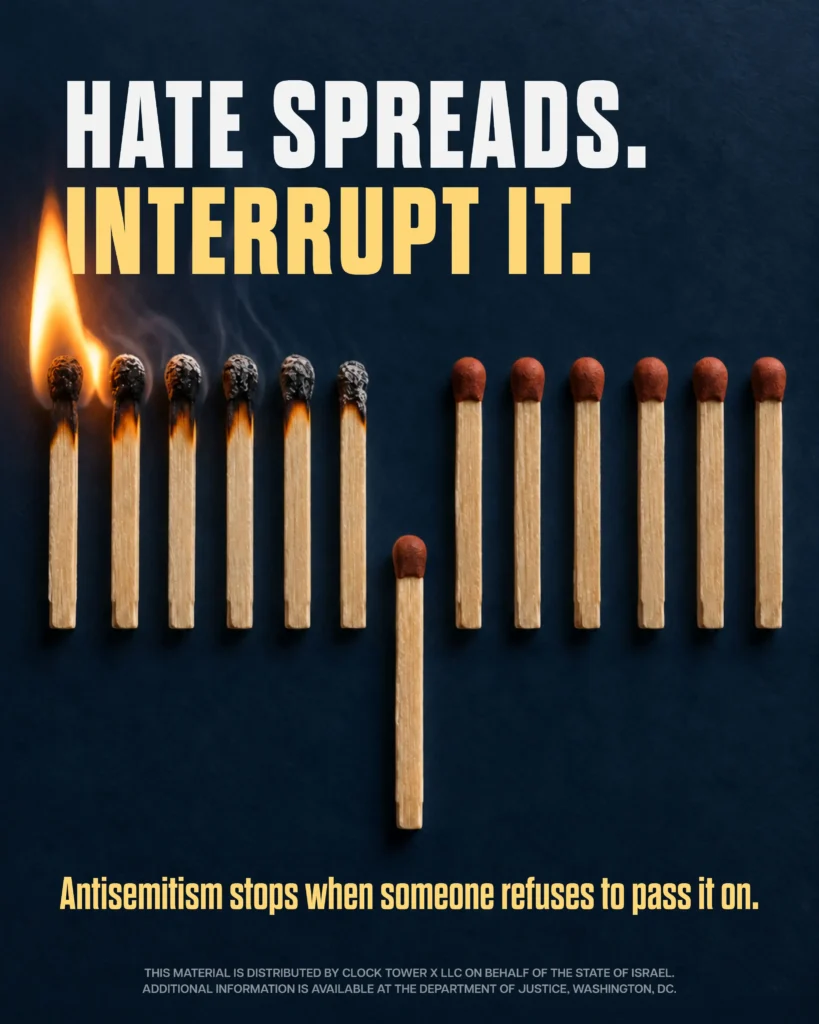
6,274 antisemitic incidents in one year. That’s an average of 17 incidents of harassment, vandalism or assault every day in America. Jewish hate is not a problem of the past.
Conversation Guide
Israel matters because it is a key ally that helps advance American interests. The partnership strengthens security, supports innovation, counters terrorism, and helps maintain stability in a region that directly affects global markets and U.S. national interests.
Unlock your full toolkit
Join the community to access every graphic, video, and post — free.